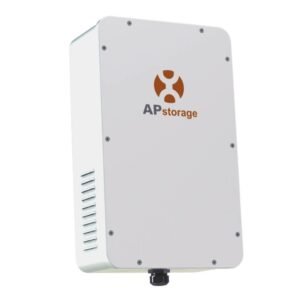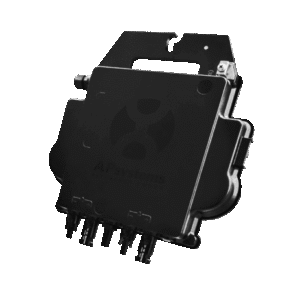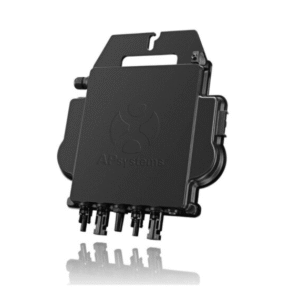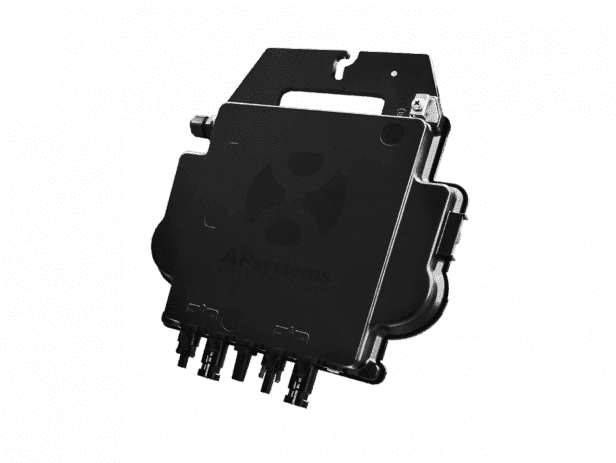
APsystems DS3-L 768VA Microinverter
768 VA, two modules with independent MPPT, up to 5 units per 20 A branch at 240 V.
View details

APsystems builds module-level power electronics: dual-module DS3 microinverters for homes, the native three-phase QT2 for commercial roofs, the ECU gateways that commission and monitor them, and the cabling that ties a branch together. CSE Solar USA lists APsystems microinverters with the matching gateway, AC bus cable and accessories so a complete, compatible system can be ordered in one place.
APsmart is the company's separate rapid shutdown line for string and hybrid inverters. It is listed here as its own section because APsystems microinverters do not need it.
The DS3 family is APsystems' third-generation dual-module microinverter for 240 V split-phase (and 208 V) systems. Each unit has two independent MPPT inputs, a 60 V maximum input, Staubli MC4 DC connectors, a Type 6 enclosure and encrypted ZigBee communication to the ECU. The three models differ in output, so the inverter can be matched to the module.
768 VA, two modules with independent MPPT, up to 5 units per 20 A branch at 240 V.
View details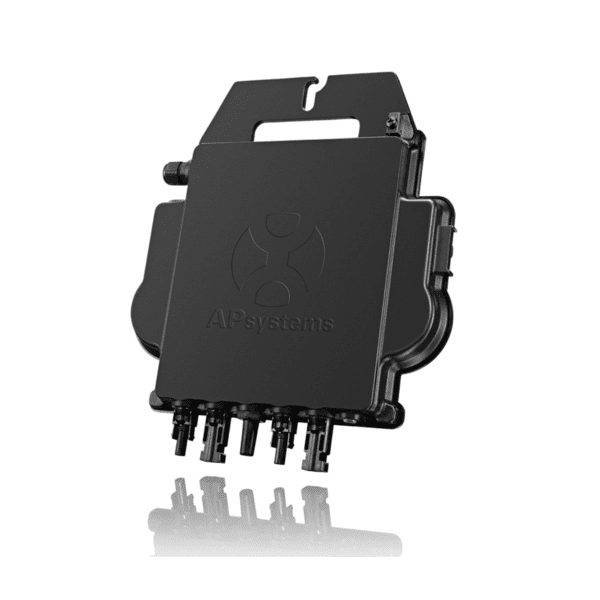
880 VA for high-output modules, up to 4 units per 20 A branch at 240 V.
View details
640 VA, up to 6 units per 20 A branch at 240 V. Currently out of stock.
View detailsThe QT2 connects four modules to one three-phase microinverter: 1,728 VA at 208 V or 1,800 VA at 480 V, for Delta or Wye grids. It uses its own 5-wire AC bus cable and accessories. QT2 supply is limited; CSE confirms availability when your order request is reviewed, before any payment is taken.

Native three-phase, four modules per unit, 1,728 VA at 208 V. Currently out of stock.
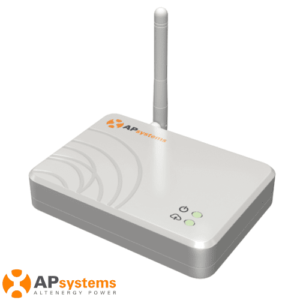
View detailsThe ECU-R (Energy Communication Unit) is the gateway between the microinverters and APsystems' EMA monitoring platform. It talks to the inverters over ZigBee, connects to the internet by Wi-Fi or Ethernet, supports up to 100 microinverters (APsystems recommends 80 or fewer per ECU) and works with DS3 and QT2 series. Installers register each microinverter and set the grid profile through the ECU, and owners see module-level production in the EMA app.
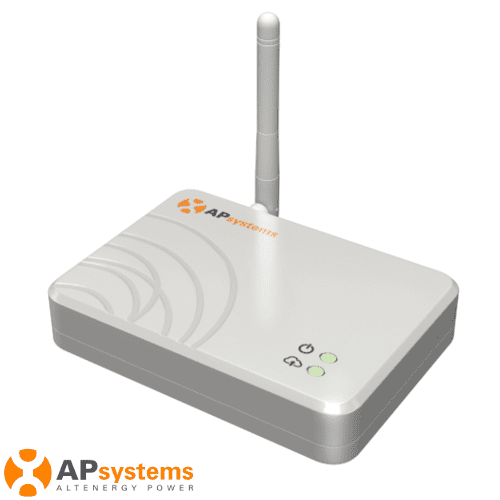
ZigBee gateway for up to 100 microinverters with Wi-Fi and Ethernet uplink.
View details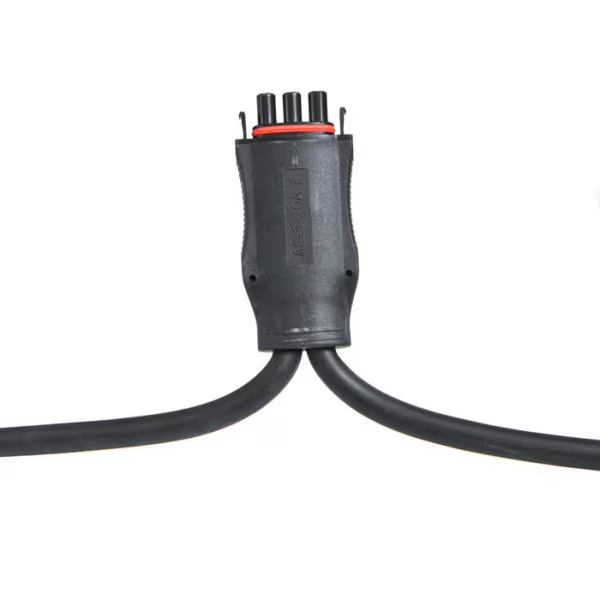
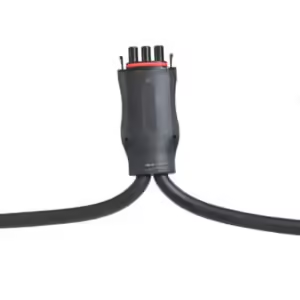
12 AWG Y3 AC bus cable, one connector drop per microinverter.
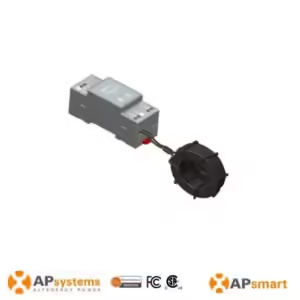
View detailsAn APsmart system has two parts. Module-level devices sit on the roof: one RSD-S-PLC per module, or one RSD-D per two modules. A Transmitter-PLC at the inverter sends the keep-alive signal over the DC lines; when AC power is cut, the signal stops and the array shuts down. The transmitter needs a 12 V supply and an enclosure, or the Outdoor Kit, which includes both. APsmart devices are SunSpec rapid shutdown certified; if your inverter already has a SunSpec-certified transmitter built in, an external transmitter is not used.
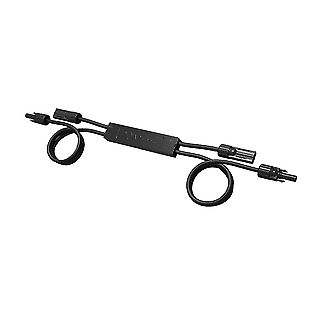
One device per module, SunSpec rapid shutdown certified, for string and hybrid inverter arrays.
View details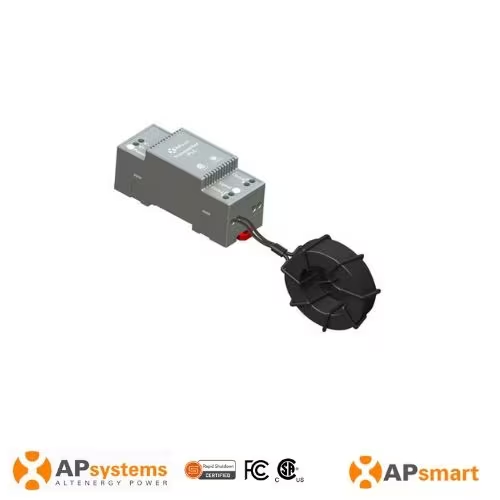
Single-core transmitter, IP65 enclosure and 85-264 VAC power supply in one kit.
View detailsThis is the bill of materials APsystems' own manuals and accessories summary describe for a residential DS3 system.
| Component | How many | Why |
|---|---|---|
| DS3-S, DS3-L or DS3 microinverter | 1 per 2 modules | Converts DC to grid AC at the module; size with the APsystems module compatibility calculator |
| Y3 AC bus cable | 1 connector drop per microinverter | Links the microinverters of a branch into one AC output |
| 3-wire bus cable end cap | 1 per branch end | Seals the open end of the bus cable |
| ECU-R gateway | 1 per system (up to 100 inverters) | Commissioning, grid profile, monitoring and the connection the warranty terms call for |
| Bus connector unlock tool | 1 per job | Releases the AC connectors without damage |
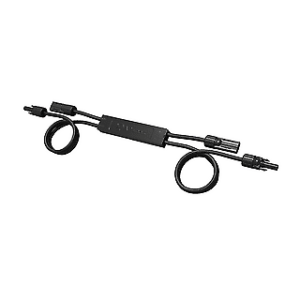
| Y-CONN caps, DC extension cables | As needed | Cap unused cable drops; reach modules that sit farther from the inverter |
| 2-pole branch breakers, AC junction box, racking hardware, rapid shutdown placard | Per design | Required for the installation; not made by APsystems |
Rapid shutdown devices are not on this list: they are not required with APsystems microinverters.
| Model | Max continuous output | Recommended module power | Max input current | Units per 20 A branch (240 V) | Units per 30 A branch (240 V) |
|---|---|---|---|---|---|
| DS3-S | 640 VA | 250 to 480 W+ | 16 A x 2 | 6 | 9 |
| DS3-L | 768 VA | 265 to 570 W+ | 18 A x 2 | 5 | 7 |
| DS3 | 880 VA | 300 to 660 W+ | 20 A x 2 | 4 | 6 |
Figures are from the APsystems DS3 Series datasheet for the USA; branch limits may vary with local requirements. Because every pair of modules has its own inverter and MPPT, shading or a fault on one pair does not pull down the rest of the array, systems can be expanded two modules at a time, and production is visible per module in the monitoring app. The DS3 datasheet lists UL 1741, UL 1741 SB, IEEE 1547, CA Rule 21 and NEC 690.11 / 690.12 compliance.
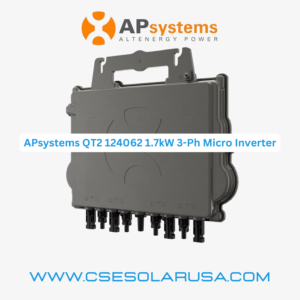
For 208 V and 480 V three-phase services, the QT2 avoids the phase-balancing work of single-phase microinverters: each unit feeds all three phases. The QT2 datasheet lists up to 5 units per 30 A branch at 208 V and up to 11 at 480 V on a 10 AWG bus. A QT2 project needs the 5-wire three-phase bus cable, the 5-wire end cap and the matching unlock tool, which are different parts from the DS3 accessories, plus an ECU for every 80 or so inverters. Tell CSE the service voltage, module model and array size and we will confirm what can be supplied.
With an ECU-R online, the EMA platform shows production for each module pair, flags an under-performing module and lets the installer manage grid-profile settings remotely. The ECU-R is an indoor device powered by a 5 V adapter and connects by Wi-Fi or Ethernet. For export limiting or consumption monitoring on a split-phase home, APsystems documents a solution using the ECU-R with a compatible energy meter; the ECU-C's zero-export and relay functions are documented for single-phase and three-phase systems rather than North American split-phase.
Documents open on the manufacturer's own document library. CSE Solar USA is an independent online solar equipment retailer; product names, specifications and warranty terms on this page come from APsystems' and APsmart's published documents.
All three are dual-module, single-phase microinverters with two independent MPPT inputs; they differ in output. The APsystems datasheet lists the DS3-S at 640 VA (recommended modules 250 to 480 W+), the DS3-L at 768 VA (265 to 570 W+) and the DS3 at 880 VA (300 to 660 W+). Match the inverter to your module wattage with the APsystems module compatibility calculator.
A DS3-family microinverter connects two modules. A QT2 connects four modules. Each input pair has its own MPPT, so modules are tracked independently.
At 240 V the APsystems DS3 datasheet lists up to 6 DS3-S, 5 DS3-L or 4 DS3 units on a 12 AWG branch with a 20 A breaker, and up to 9, 7 or 6 units on a 10 AWG branch with a 30 A breaker. The datasheet notes that limits may vary and local requirements apply.
In practice, yes. APsystems defines a system as microinverters plus an ECU plus the EMA monitoring platform. Microinverters are registered and the grid profile is set through the ECU, and the APsystems U.S. warranty terms depend on the system being connected to the internet through an ECU.
No. APsystems states that its microinverter systems meet the rapid shutdown requirement without additional equipment, and the DS3 and QT2 manuals identify the products as PV rapid shutdown equipment conforming to NEC 690.12 when installed as directed. APsmart RSD products are for string and hybrid inverter arrays.
APsmart is the rapid shutdown product line from the same company. An APsmart system uses one RSD-S-PLC per module, or one RSD-D per two modules, plus a Transmitter-PLC at the inverter. It is used with string or hybrid inverters that do not have a SunSpec rapid shutdown transmitter built in. Check the APsmart inverter compatibility list before ordering.
The QT2 is a native three-phase microinverter: 1,728 VA at 208 V or 1,800 VA at 480 V, four modules per unit, compatible with Delta and Wye grids. It uses a dedicated 5-wire AC bus cable, not the DS3 cable. Contact CSE to confirm current availability before planning a project around it.
The current APsystems Limited Warranty for the USA lists 25 years for DS3, QT2 and QS2 microinverters, 3 years for ECU gateways and 2 years for bus cable. The document sets conditions, including continuous internet connection through an ECU and purchase through APsystems-authorized channels. Read the warranty document and confirm eligibility for your purchase before relying on it. Warranty service is provided by APsystems under its own terms.
Microinverters are grid-interactive electrical equipment. APsystems manuals require installation by qualified professionals in line with the National Electrical Code, local permitting and utility interconnection rules.
Send us your module model, the number of modules and your service voltage, and CSE will put together the matching microinverters, bus cable, end caps and gateway. Call (702) 608-8385, email info@csesolarusa.com or use our contact form.
Related categories: Microinverters · Rapid Shutdown Devices · Inverter Monitoring · Inverter Accessories · Solar Panels